Are Portable Generators Waterproof & Can They Run in the Rain Safely?
February 6, 2026 | Nate Cord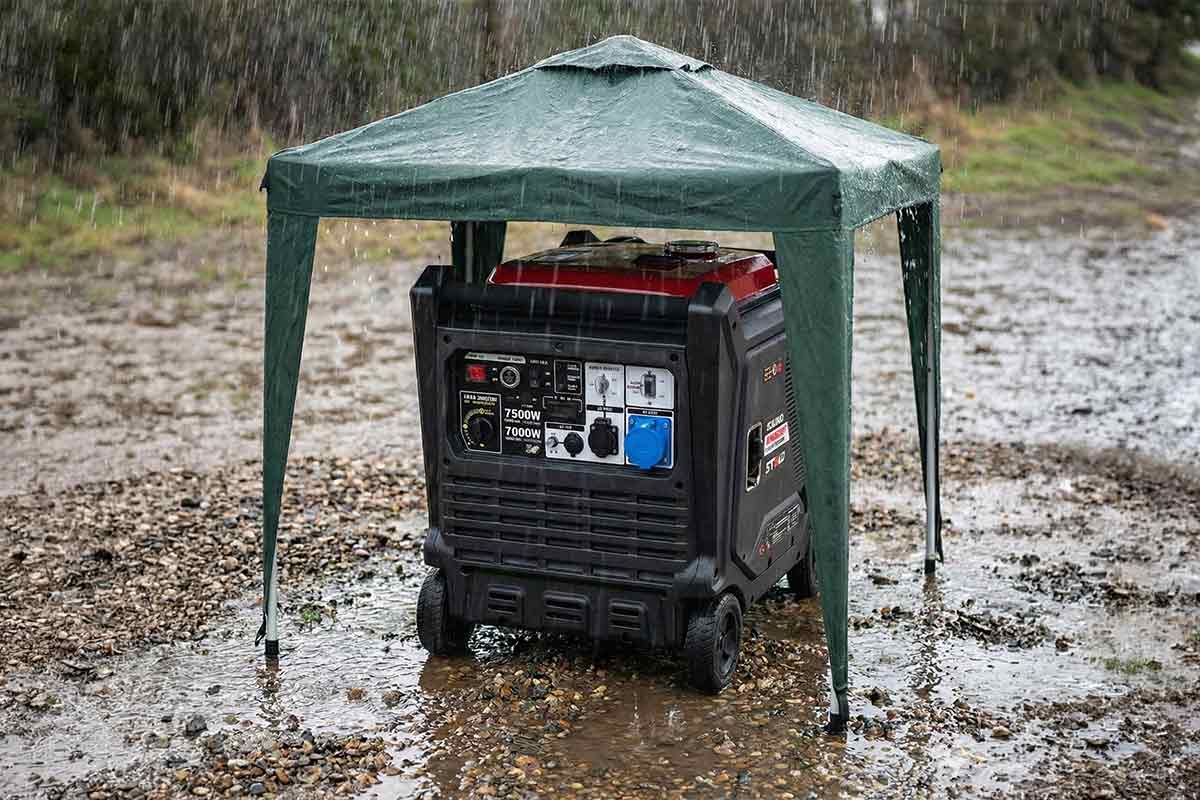
A portable generator is a versatile device ideal for a wide range of scenarios, including camping, road trips, and emergency situations.
As a result, they are continuing to grow in popularity, and consumers want to know their full capabilities, such as: can a portable generator run in the rain and are portable generators waterproof?
These aren’t surprising questions when we consider that in 2024, the UK’s annual rainfall was 1,386 millimetres. And with portable generators being predominantly used outdoors and for power cuts, consumers are naturally concerned about the dangers of electricity and water.
In this guide, our experts will answer these essential questions and share insights on how to safely use a portable generator.
Are Portable Generators Waterproof?
No, unless specified, portable generators aren’t waterproof and shouldn’t be left completely uncovered in heavy rainfall.
Portable generators are generally not waterproof due to their electrical components, which, when wet, can cause serious safety issues. Therefore, it’s typically recommended by the manufacturer to avoid getting the portable generator completely wet.
However, some portable generators are at least weather-resistant but can’t be used in heavy rainfall.
Waterproof vs Weather-Resistant
Waterproof means the item can be fully submerged in water without causing damage. In comparison, weather-resistant offers limited protection for a short period.
If you are in need of a waterproof portable generator, the GOLZ BattPak 5048 has been tested and works for at least 30 minutes underwater.
With these types of portable generators, outdoor use in the rain is possible. Let’s take a closer look at whether regular portable generators can be used in the rain.
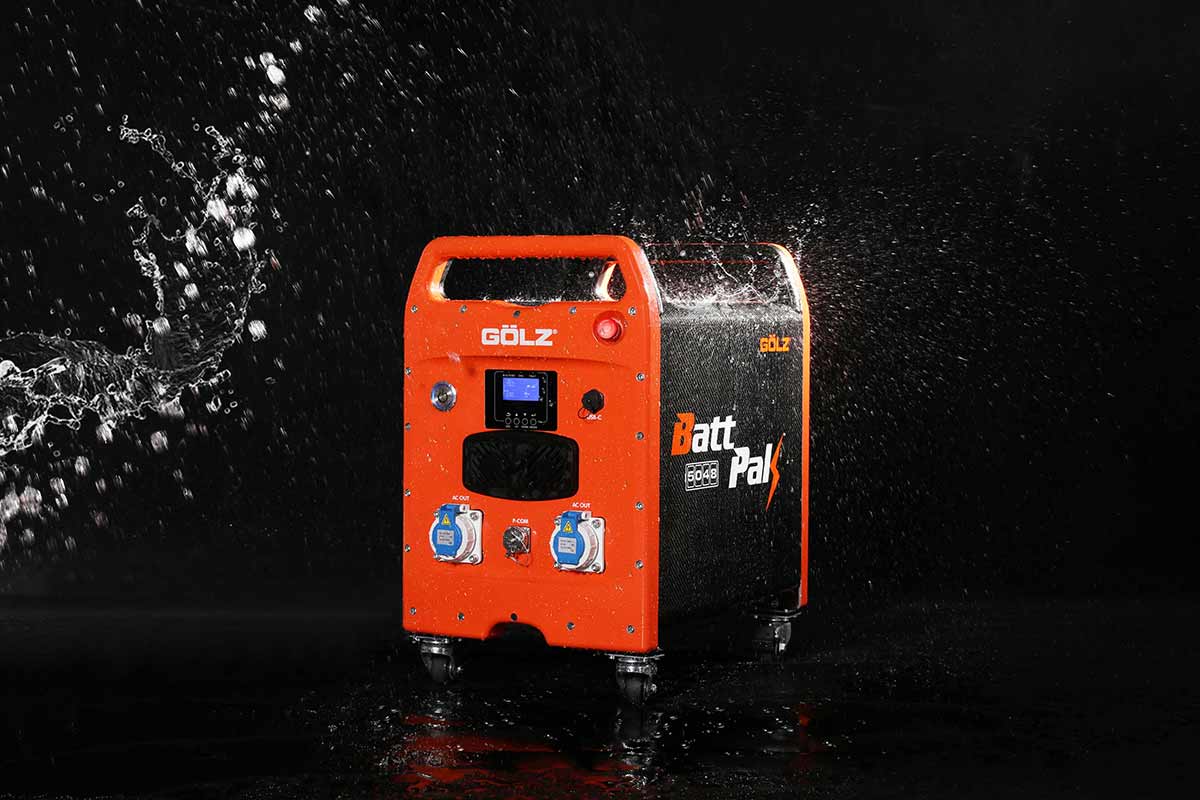
The GOLZ BattPak 5048 has been tested and works for at least 30 minutes underwater.
Can a Portable Generator Run in the Rain?
Again, the short answer is no, not directly. Unless the portable generator is specifically designed to be waterproof or weather-resistant, it shouldn’t be used in the rain, whether it’s light or heavy rainfall.
If these types of generators are used in the rain, the user risks safety issues such as electric shock, fire hazard, and equipment or property damage.
But why exactly is running a portable generator in the rain so dangerous?
Why Running a Generator in the Rain Is Dangerous
Here is a step-by-step playthrough of why running a portable generator in the rain is a serious hazard.
- Sockets & Outlets: Even light rainfall can result in water entering the portable generator’s sockets, or even the extension leads.
- Short-Circuiting: This risks the generator short-circuiting, which could result in electric shocks or a fire, depending on the severity of damage.
- Corrosion: Even if the generator doesn’t short-circuit, rain can cause corrosion both on the inside and outside, resulting in long-term damage and safety issues.
- Generator Lifespan: So, not only is it dangerous to run a portable generator in the rain, but it also costs more in the long run as the generator will need to be replaced before its time.
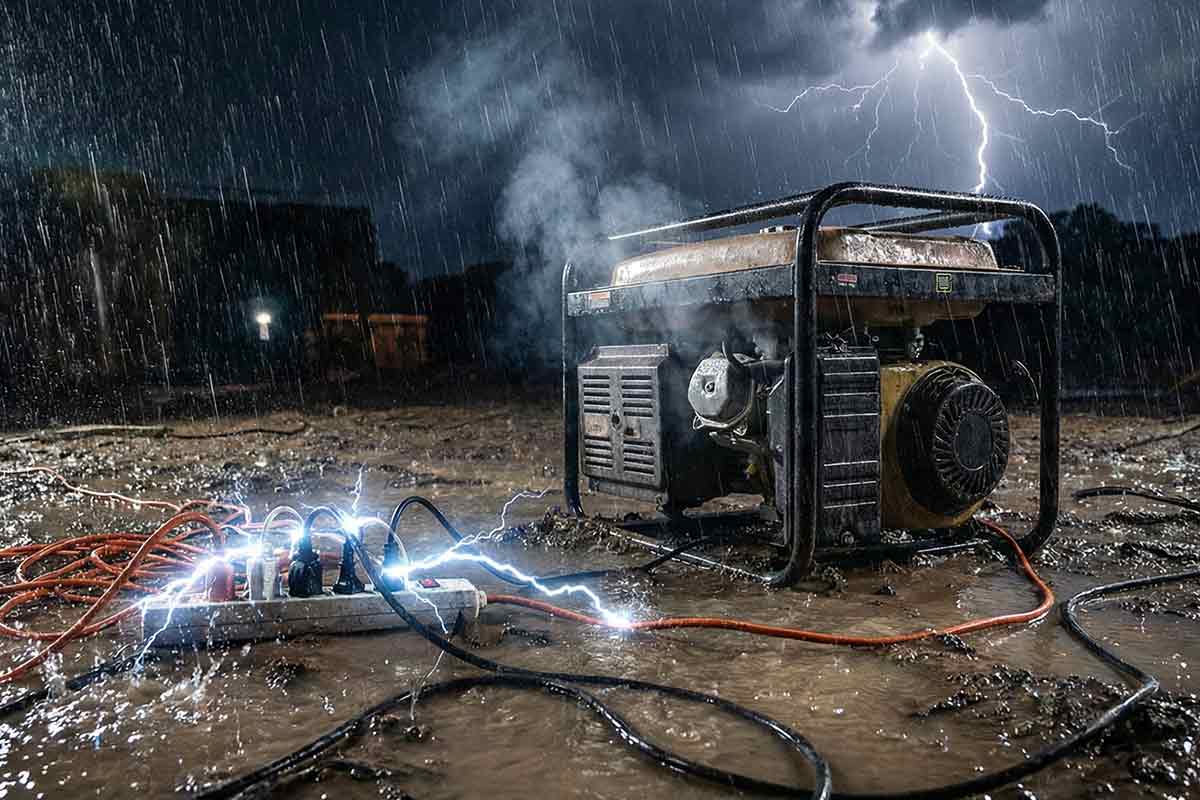
Ensure the right precautions are taken when using a portable generator in the rain.
How to Safely Use a Generator in Wet Weather
Canopies & Tents: Whether you’re camping, on a work site, or at home, canopies and tents can be used to provide shelter for your portable generator, stopping the rain from causing both long-term and hazardous damage.
Proper Ventilation: Fuel-powered generators give off carbon monoxide, a poisonous gas that can make you seriously ill, so efficient ventilation is essential when operating a generator for health and safety.
Elevation: Rain isn’t the only way water can enter a generator; sitting on the wet ground can also result in water damage. So, ensure to elevate your generator on a platform to prevent this from happening.
Indoors & Enclosed Spaces: You must never operate a generator indoors or in enclosed spaces, even if it’s raining. Due to the carbon monoxide being emitted, this would be a serious health and safety issue, putting you and others in danger. Do not run the generator in a shed or a makeshift outbuilding, as condensation can also cause corrosion due to damp conditions.
Extension Leads: Similar to portable generators, unless an extension lead is specifically designed for outdoor use and is waterproof, sufficient water protection will be needed to prevent short-circuiting, electrical shocks, and fire hazards.
Storage: To help prevent corrosion and support the lifespan of your portable generator, a generator cover or case should be used during storage to stop water and dust from entering, ensuring safety at all times.
How We Can Help
To summarise, portable generators aren’t waterproof and can’t be used in the rain unless the manufacturer specifies, or you take the right precautions to ensure the generator is used safely.
Safety should always come first; that’s why we offer a wide range of generator accessories, including weather protection solutions.
For more advice on how to use a generator safely, or how to choose the right generator for you, get in touch with our team on 01639 849847 or at [email protected].
For more information on our generator stock, check out more of our expert guides.









Be the first to know the latest industry news and offers