What Is a Cement Mixer? Your Complete Buying Guide
August 5, 2025 | Nate Cord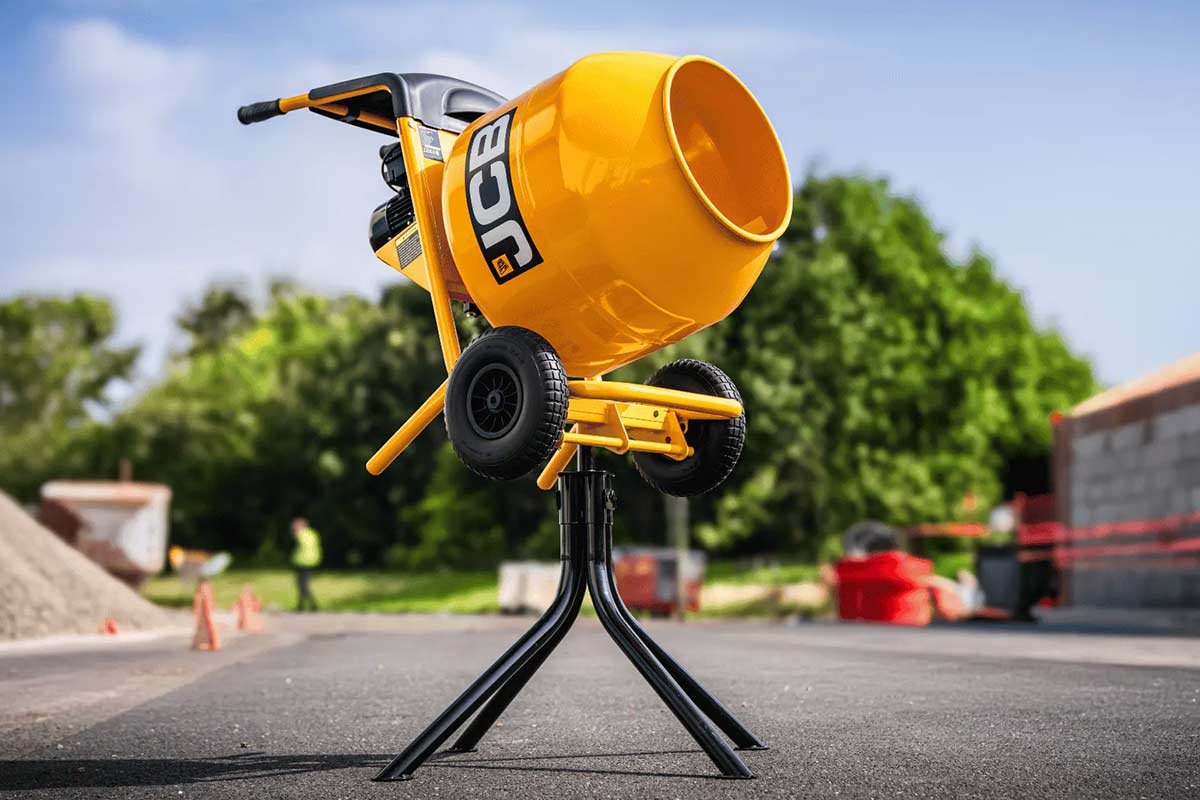
A cement mixer, sometimes also referred to as a concrete mixer, is a machine that combines cement, water, sand, and gravel (or other aggregates) to create concrete. Instead of having to mix everything by hand, which, let’s face it, can be slow, messy, and tiring – a cement mixer uses a rotating drum or container with paddles inside that churn the ingredients together evenly and quickly.
But if you’re new to construction or just looking to upgrade your equipment, the world of cement mixers can feel a bit overwhelming. What types are there? How do they work? And which one is right for your needs? In this guide, we will answer all of your questions.
How Does a Cement Mixer Work?
A cement mixer is designed to mix cement, sand or gravel, and water into concrete. This happens via the drum which rotates constantly, keeping the mixture moving so it doesn’t set too early.
Inside the drum, there are spiral blades or fins that scoop up the materials and fold them over and over again as the drum spins. It’s this action that gives you a smooth, even mix. Most mixers spin in one direction to mix, and then in reverse to help pour it out more easily.
On building sites, you’ll find petrol or diesel-powered mixers, or sometimes electric ones for smaller jobs. And then there are the massive truck mixers, which can carry ready-mix concrete over long distances. Those keep the drum turning while they’re on the road so the concrete stays fresh and usable when it arrives.
The Different Types of Cement Mixers
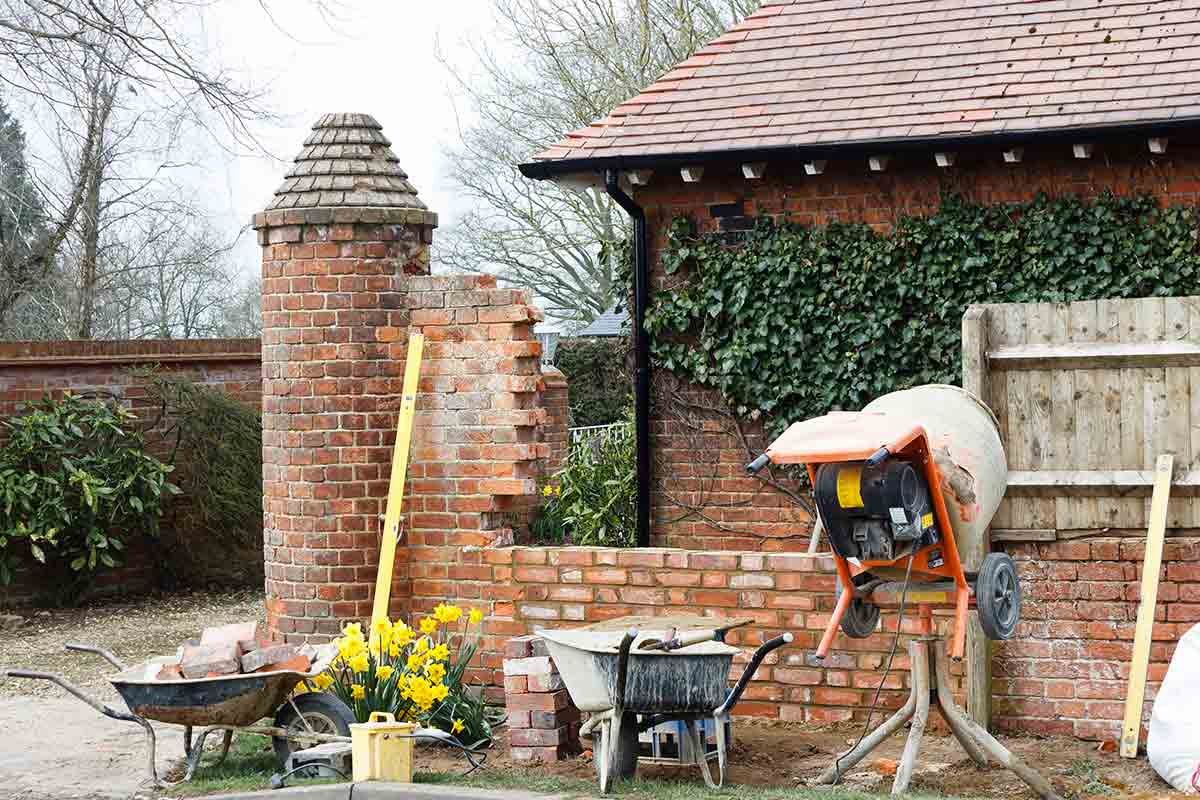
There are a few different types of cement mixers, and depending on the type of job or project you’re working on, the type of mixer you use will make a huge difference.
1. Drum Mixers
Drum mixers are the go-to choice for most people working with concrete, whether you’re building a garden wall or laying the foundations for a new house.
You can recognise a drum mixer by, you guessed it, a large round drum, usually made of steel, that spins around on a slight angle. Inside the drum are spiral-shaped blades, or “fins,” which lift and fold the mix over and over as the drum turns. This constant tumbling action is what mixes your ingredients (cement, sand or gravel, and water) into smooth, usable concrete.
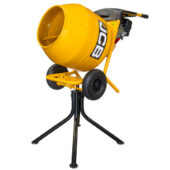
You’ll find drum mixers in all sorts of sizes, from smaller, portable electric models ideal for home projects, to huge petrol or diesel-powered versions used on big sites.
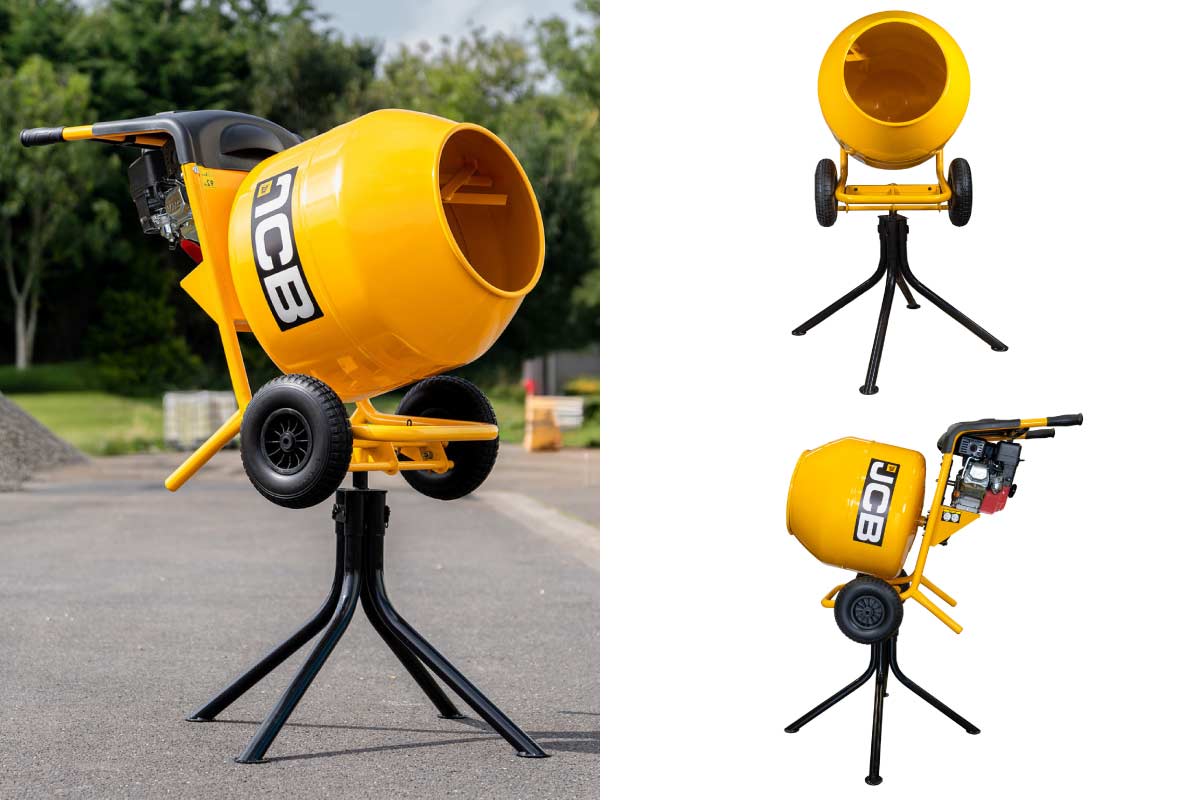
At Generators Direct, we stock a range of drum cement mixers from reliable suppliers like JCB, available in various types and drum capacities.
If you’d like to chat to a member of our team, feel free to give us a call on 01639 849847 for expert advice.
2. Handheld or Portable Cement Mixers
For tackling a small concrete job at home, a handheld or portable cement mixer could be your best mate.
These are compact, electric-powered mixers that you can plug straight into a normal mains socket. And most models are lightweight and easy to move around, so you don’t have to worry about wrestling with a heavy machine just to mix half a bag of cement.
3. Twin-Shaft Mixers
Twin-shaft mixers are the powerhouses of the concrete world. They’re industrial-grade machines designed to mix huge volumes of concrete very quickly, and with incredible consistency.
As the name suggests, these mixers use two horizontal shafts that spin in opposite directions. Each shaft is fitted with a series of mixing paddles or blades. As they rotate, the paddles lift, churn, and fold the materials in a criss-cross motions.
4. Electric vs. Petrol vs. Diesel Cement Mixers
When choosing a cement mixer, one of the decisions you’ll need to make is whether to go for a petrol, diesel or electric model.
Electric Cement Mixers
Electric cement mixers are a truly brilliant choice for home DIYers and even small-scale tradespeople. This is because they’re simple, clean, and easy to use – just plug them into a standard socket and off you pop!
Because they’re powered by electricity, they run quietly and don’t produce any fumes, which makes them ideal for use in garages, workshops, or enclosed spaces where ventilation might be an issue.
That said, electric mixers do have their limits. You’ll need access to mains power, or a generator if you’re working somewhere off-grid. And while they’re great for small to medium jobs, they’re not built for heavy-duty, all-day mixing. This is where petrol or diesel alternatives come in.
A great example of a quality electric cement mixer is the JCB Electric Seam Welded Cement Mixer. This unit is built for professional use with portability in mind, featuring a robotically welded one-piece chassis, an extra-thick seam welded 134L drum with two welded paddles, and a reinforced boss for heavy-duty site conditions.
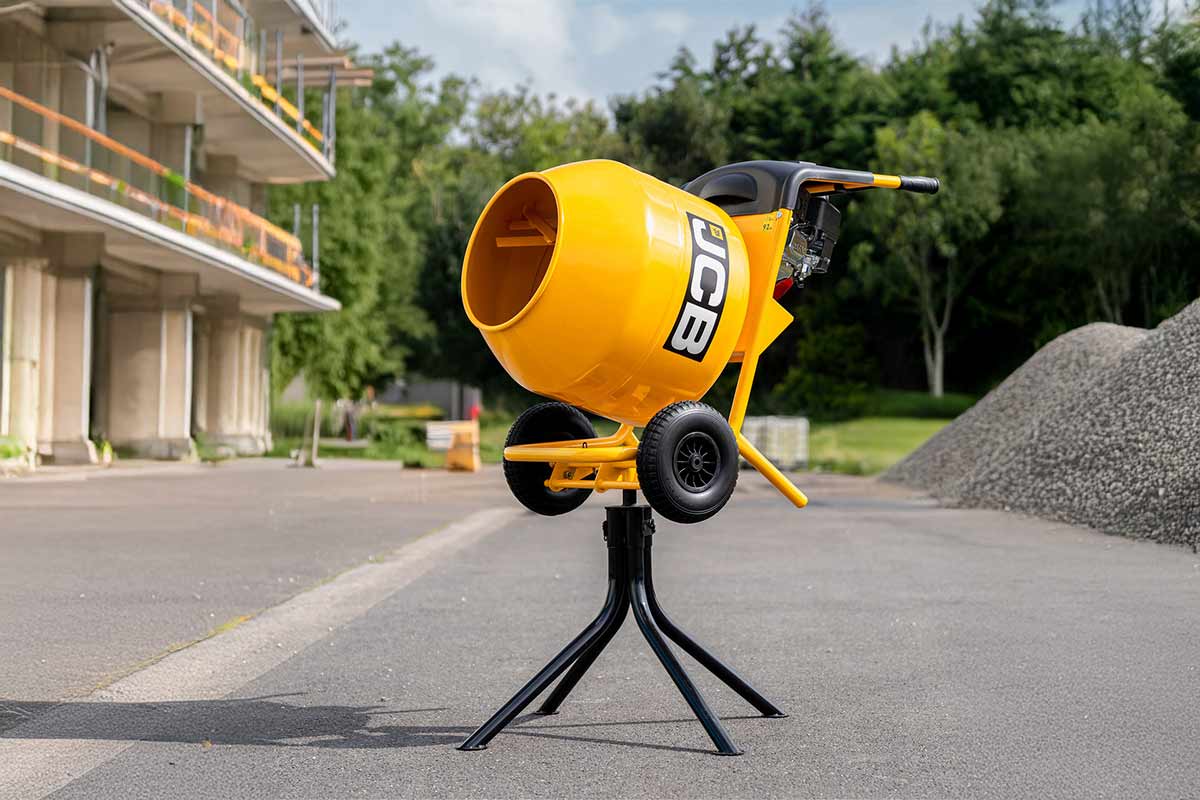
The JCB Electric Seam Welded Cement Mixer comes with an impressive 3 year warranty.
Petrol Cement Mixers
A petrol cement mixer is a great choice if you’re a builder, landscaper, or someone simply working out on remote sites where electricity isn’t always available.
Petrol mixers are more powerful than electric models, so they can handle thicker, heavier mixes and larger batches without struggling. This makes them ideal for bigger jobs or repeated, all-day use, where an electric mixer might overheat or slow you down.
That said, in comparison to their electric counterparts, petrol cement mixers are louder and the engine, of course, produces fumes, so they’re definitely better suited to outdoor use.
The JCB-CM150P Petrol Seam Welded Cement Mixer is a great petrol option, built for professional use with great durability, featuring a robotically welded one-piece chassis, an extra-thick seam welded 134L drum with two welded paddles, and a reinforced boss for heavy-duty site conditions.
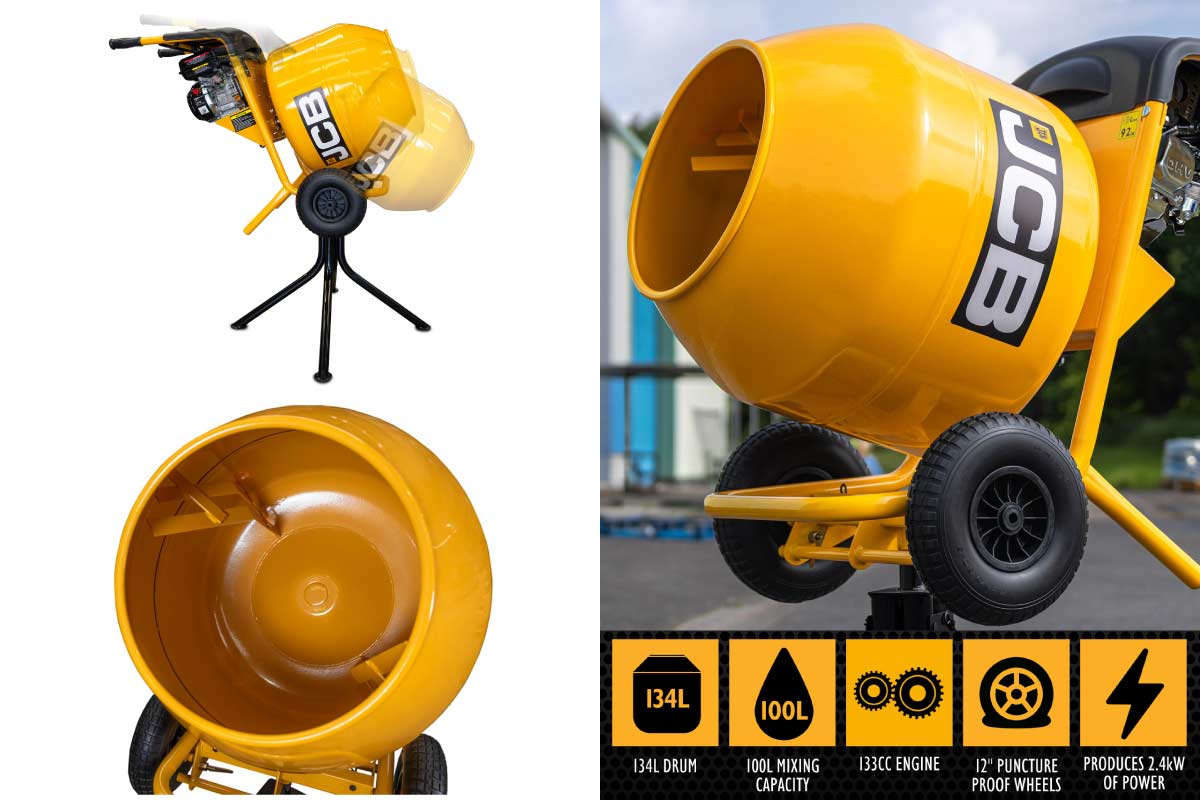
The JCB-CM150P Petrol Seam Welded Cement Mixer comes with a 3 year warranty.
Diesel Cement Mixers
Lastly we have diesel cement mixers, designed for serious, heavy-duty work – the kind of jobs where you’re mixing large volumes of concrete all day, every day.
You’ll mostly see these on big commercial sites, batching plants, or anywhere that demands high output and long runtimes. If petrol mixers are a step up from electric, diesel takes it to a whole new level.
One of the biggest advantages of this type of mixer is power, and they’re also extremely fuel-efficient, especially when used for long stretches, which makes them cost-effective for big projects over time.
However, all that power comes with trade-offs. Diesel mixers are big, heavy machines – you won’t be chucking one in the back of a van after work. They’re usually either towable or set up as permanent kits on-site.
How Generators Direct Can Help
Do you have any other questions about garden machinery or require additional advice? Don’t hesitate to get in contact with our experts using this form or via phone at +441639849847.
And if you’re on the hunt for a quality generator, at Generators Direct, we offer a range of single and three-phase generators, power stations and power banks for your specific needs.
All of our products are manufactured, tested and certified to industry standards, and come with a price promise – you won’t find prices cheaper anywhere on the web, but if you do, we’ll match them. In addition to this, all orders come with free mainland UK shipping and after-sales support from our experts.
Related Products
-

JCB 230V Electric Seam Welded Cement Mixer 550W 100 Litre Working Capacity
-
JCB 110V Electric Seam Welded Cement Mixer 550W 100 Litre Working Capacity
-
JCB Cement Mixer 133cc Petrol Engine 134L Seam Welded Drum 100L Working Capacity
-
JCB Cement Mixer Honda GX160 Petrol Engine 134L Seam Welded Drum 100L Working Capacity









Be the first to know the latest industry news and offers