How to Service & Maintain a Generator
March 31, 2026 | Nate Cord
A well-serviced generator is a reliable generator. Whether you depend on a generator for home backup, to power tools on site, or as critical power for your business, generators require regular maintenance to remain reliable over time. In fact, it’s a non-negotiable. Without it, your generator can underperform or fail when you need it most. Despite this, generator maintenance is often overlooked.
This guide looks to change that. Our experts will walk you through everything you need to know about servicing your generator, including why generator maintenance is important (and how it differs from car engine maintenance, to demonstrate the point), when to service a new generator, how often to service different types of generators, and the other regular checks that should be part of your schedule as a generator owner/user.
Why is Generator Maintenance Important?
A generator is a lifeline for homes, businesses, industrial sites, and critical facilities like hospitals and data centres. When the mains power fails, your generator steps up. But without proper maintenance, it can fail at the exact moment you need it most.
Regular generator maintenance prevents unexpected breakdowns, but it also:
- Extends your generator’s life span. Routine servicing reduces wear and tear on engine components, keeping parts running for decades rather than just years.
- Improves how efficient your generator is. Dirty air filters, contaminated fuel, and worn engine parts all increase fuel consumption.
- Reduces long-term repair costs. Catching minor issues early can prevent them from becoming major failures or extensive, expensive repairs.
- Ensures safety and compliance. Regular maintenance prevents fuel leaks, exhaust system blockages, fire hazards, and emissions violations.
As such, generators rely on maintenance to perform as expected, which is crucial in emergency situations.
Why a Generator Engine Isn’t Like a Car Engine
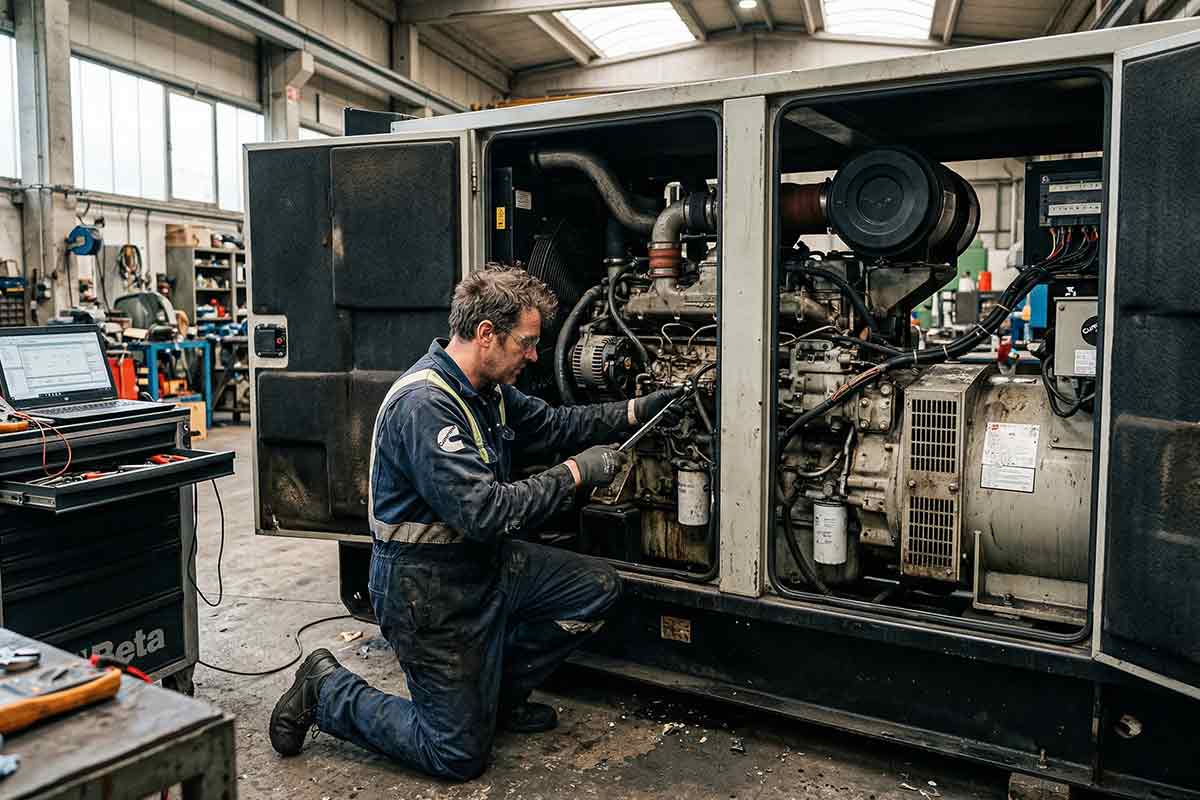
One of the most common misconceptions our experts encounter is treating a generator engine like a car engine. They’re both internal combustion engines, but their working lives are fundamentally different.
A car engine constantly changes speed. It accelerates, decelerates, idles at traffic lights, and cruises on motorways. This variation gives the engine and its oil time to recover between periods of hard work.
A generator engine does the opposite. It starts up and then runs at a fixed, high RPM, often 3000 revolutions per minute, for hours or even days on end. It sits under steady load, generating constant heat and experiencing continuous stress. The oil doesn’t get a break as it would with a car; it just keeps working, breaking down far faster than it would in a vehicle.
Because of this, engine hours matter more than you might think. Even 100 hours can represent significant wear, so servicing intervals need to be shorter and more regular than what someone might expect from a vehicle.
You can think of engine hours as car mileage. If a car averages 60 miles per hour on the road, then:
- 100 engine hours is roughly equivalent to 7,000 miles
- 250 engine hours is like 17,000 miles
- 500 engine hours is comparable to 40,000 miles.
Would you drive 17,000 miles without an oil change? Of course not. So why would you run your generator for 250 hours without one? This is why regular oil changes, filter checks, and inspections aren’t overkill (as is sometimes thought). Instead, they’re normal care for an engine that works hard every minute it runs.
When to Service a New Generator
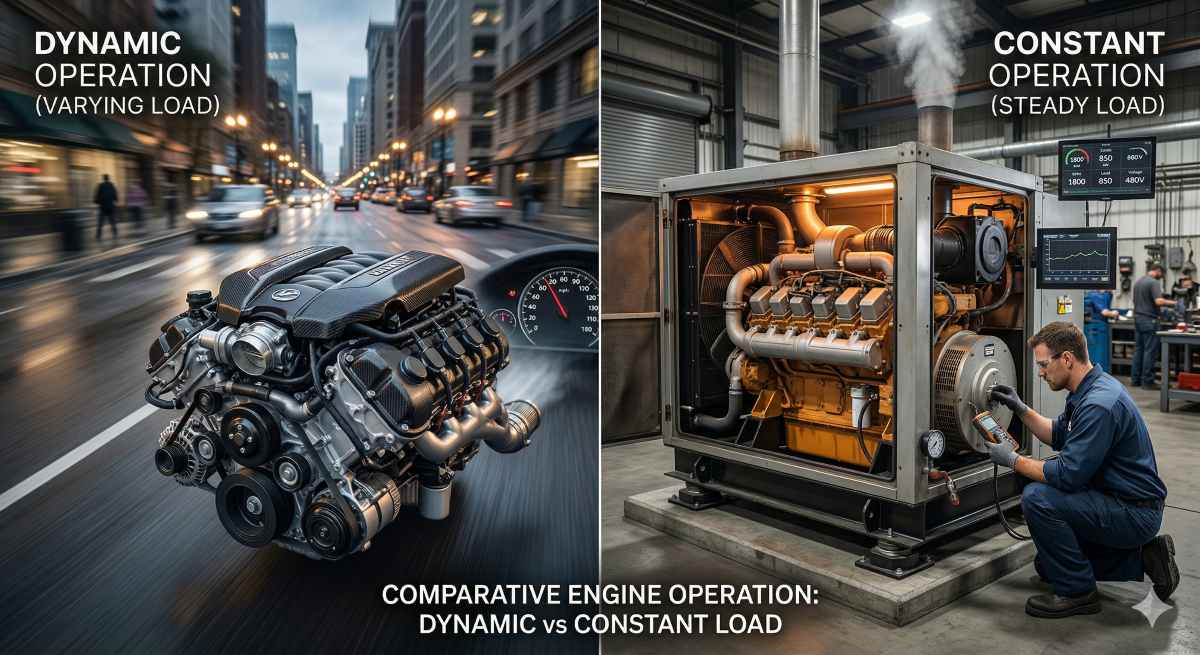
Every new generator requires an early oil change. This is known as the “break-in period,” and it’s absolutely crucial for your engine’s long-term health.
During the first few hours of operation, the internal engine components “bed in” against each other. This natural process creates microscopic metal particles that end up in the engine oil. Leaving this oil in the engine would allow those particles to circulate, causing premature wear.
- Most new generators will need the oil changed after the first 5 to 20 hours; this is called a breaking-in period. (like the Ford FG7750E and FG2500iS), the first oil change is due after just 5 to 20 hours. The Ford manuals specifically recommend changing oil after the first 5 hours.
- After the first intial oil change, most engines require oil changes after 25 to 100 hours, and some up to 200 hours.
How Often Do You Need to Service Your Generator?
Before we dive into schedules and intervals, there’s one rule that applies to every generator owner: always follow the manual.
The suggestions we provide in this guide are excellent, industry-standard recommendations based on extensive research and the models we supply. However, your generator’s manufacturer knows your specific model better than anyone.
If there’s ever any discrepancy between our guide and your manual, follow your manual. And if you’ve misplaced yours, you can usually find a digital copy online or contact the manufacturer.
Without further ado, these are the main factors that determine how often your generator requires servicing after its first service, and understanding them will help you plan your maintenance schedule.
1. Engine Speed: 3000 RPM vs 1500 RPM
This is one of the most significant factors. Generators operate at different engine speeds, and those speeds directly affect wear and tear.
3000 RPM Generators
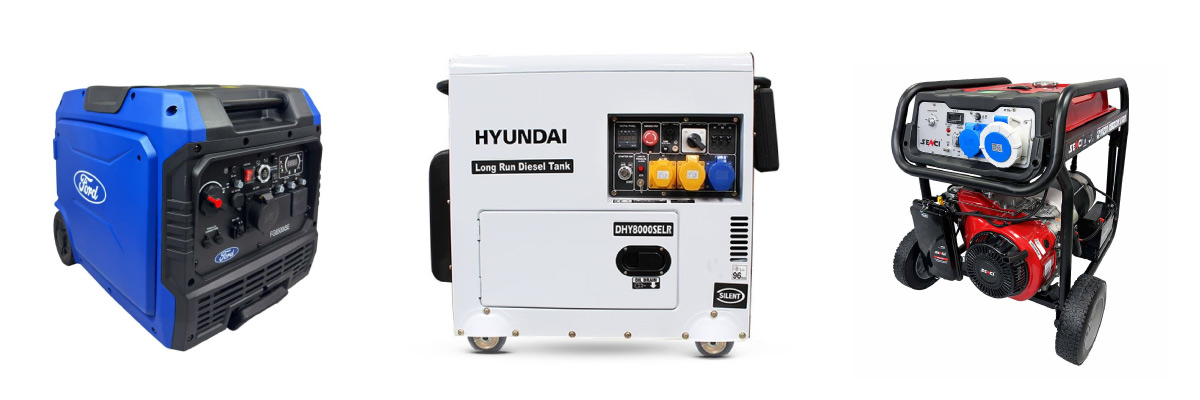
These tend to be more compact, portable, and often more budget-friendly units. Most of our petrol and inverter generators fall into this category. Because the engine spins faster, it works harder and generates more heat. As a result, 3000 RPM generators generally require more frequent servicing, typically every 100 hours for oil changes.
1500 RPM Generators
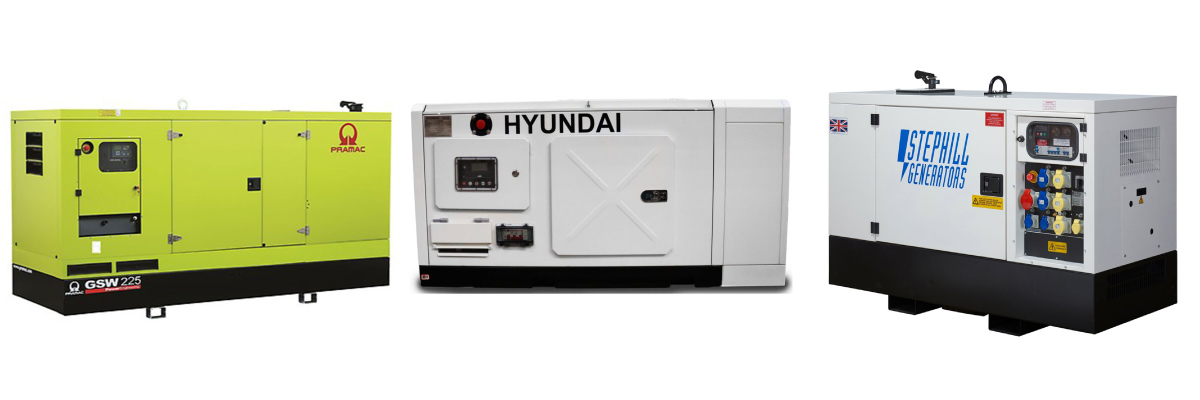
These are usually larger, industrial-grade diesel generators built for heavy-duty, long-running applications. The slower engine speed places far less strain on internal components, allowing for extended service intervals. A quality 1500 RPM generator may require an oil change every 250 to 500 hours, depending on the oil type used.
These machines are more expensive upfront, but their lower maintenance requirements and longer lifespan make them a cost-effective choice for continuous use.
2. Engine Quality and Brand
A generator powered by a renowned, high-quality engine, like Honda, will have longer service intervals than an entry-level model, due to tighter manufacturing tolerances, better materials, and superior engineering. Premium engines simply don’t wear as quickly, and their oil remains effective for longer.
3. Operating Conditions
Where and how you use your generator make a huge difference. A generator operating in a clean environment requires less frequent servicing than one exposed to dust and debris, extreme temperatures, high humidity, or continuous prime-power use.
4. Frequency of Use
A generator used weekly for a few hours will have different servicing needs than one that sits idle for months, then runs for days during a power outage. For infrequently used generators, the calendar can become more important than the hour meter. We recommend at least annual service, even for generators that barely run, because components can still degrade over time.
Who Can Service a Generator?
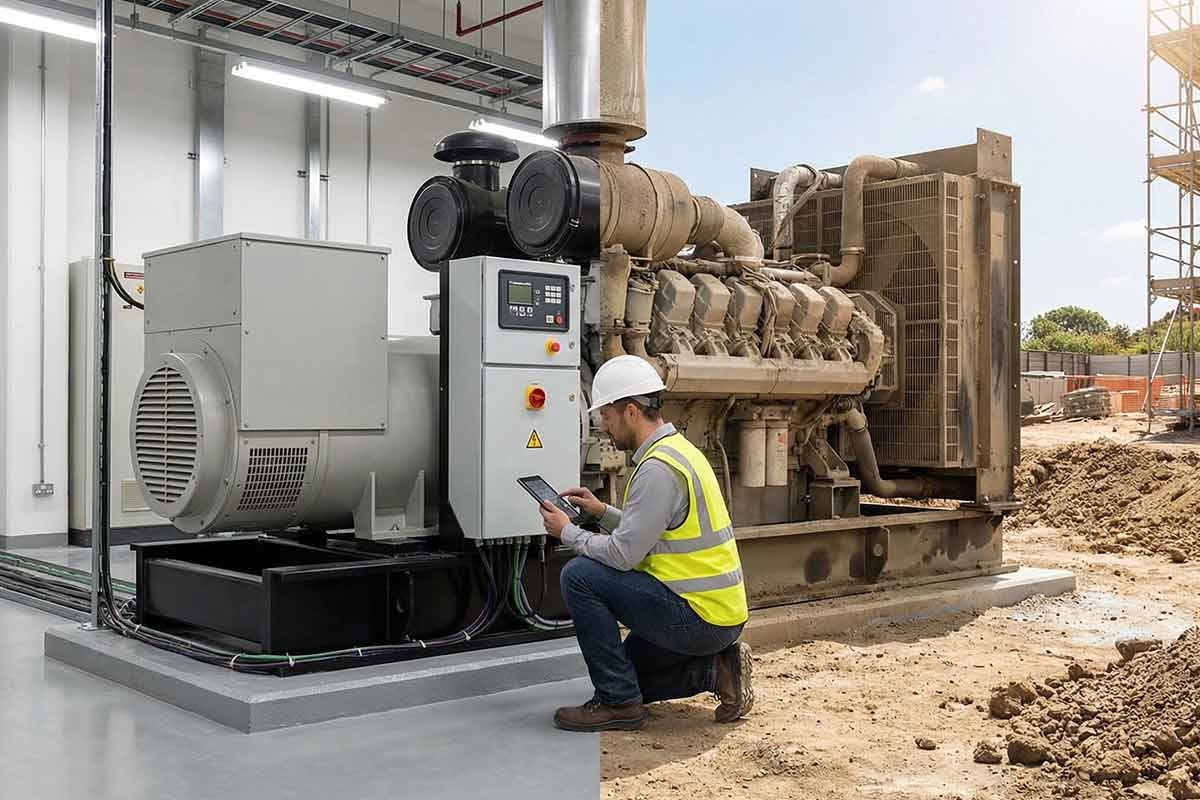
Many maintenance tasks are well within the capabilities of a competent owner. Checking oil, cleaning air filters, and performing visual inspections are straightforward and can be aided with a generator service kit.
But some jobs are best left to professionals. You might want to consider professional help for:
- Valve clearance adjustments
- Fuel system deep cleaning
- Electrical fault finding
- Load bank testing
- Alternator servicing
- Any job requiring special tools or technical knowledge.
General Generator Maintenance Schedule & Checklist
Beyond the scheduled services, regular checks between services are essential to prevent generator faults and failures before they occur. Please check your user manual for specific servicing schedules and what you need to service at what times.
Daily/Before Each Use
- Check the engine oil level and top up if necessary
- Check fuel level and look for any signs of leakage
- Inspect the generator’s exterior for dents, damage, or loose parts
- Check battery voltage and ensure connections are clean and tight
- Listen for unusual noises that might indicate problems
- Check the air filter for obvious blockage or dirt
- Ensure cooling vents are clear of debris.
Weekly/Monthly
- Run the generator under load to ensure proper operation
- Check coolant level (on liquid-cooled models)
- Inspect the exhaust system for leaks or blockages
- Verify automatic transfer switch (ATS) functionality
- Inspect and clean the air filter (more often in dusty conditions)
- Test the battery and charging system thoroughly
- Check all hoses for cracks, leaks, or deterioration
- Tighten any loose nuts, bolts, or fastenings
- Run the generator under at least 50% load for 30 minutes.
Quarterly (Every 3 Months or 50 Hours)
- Change oil and oil filter (if due)
- Inspect the fuel filter and replace it if necessary
- Test generator under full load conditions
- Check coolant hoses and radiator for leaks
- Inspect the spark plug and clean or replace as needed.
Annually or Every 300 Hours
- Full fuel system inspection, including tank cleaning if required
- Replace the fuel filter
- Check the alternator and all electrical connections
- Conduct insulation resistance testing on wiring
- Flush and replace coolant (if due)
- Perform load bank testing to verify full-load performance
- Check and adjust valve clearances
- Inspect and clean the entire cooling system
- Have a professional service if you’re not confident doing it yourself.
If you’re maintaining your own generator, precise specifications matter. For example, Senci petrol generators require inlet valve clearances of 0.10–0.15mm and exhaust clearances of 0.15–0.20mm when checked cold. Always consult your manual for the exact figures for your model.
One of the simplest and most valuable things you can do is keep a maintenance log in a notebook or spreadsheet. You can record the date of each check/service, the work performed, any issues noted or parts replaced, and the next service due date. It proves you’ve maintained the generator if you need to make a warranty claim, and it also helps you spot patterns and issues before they arise.
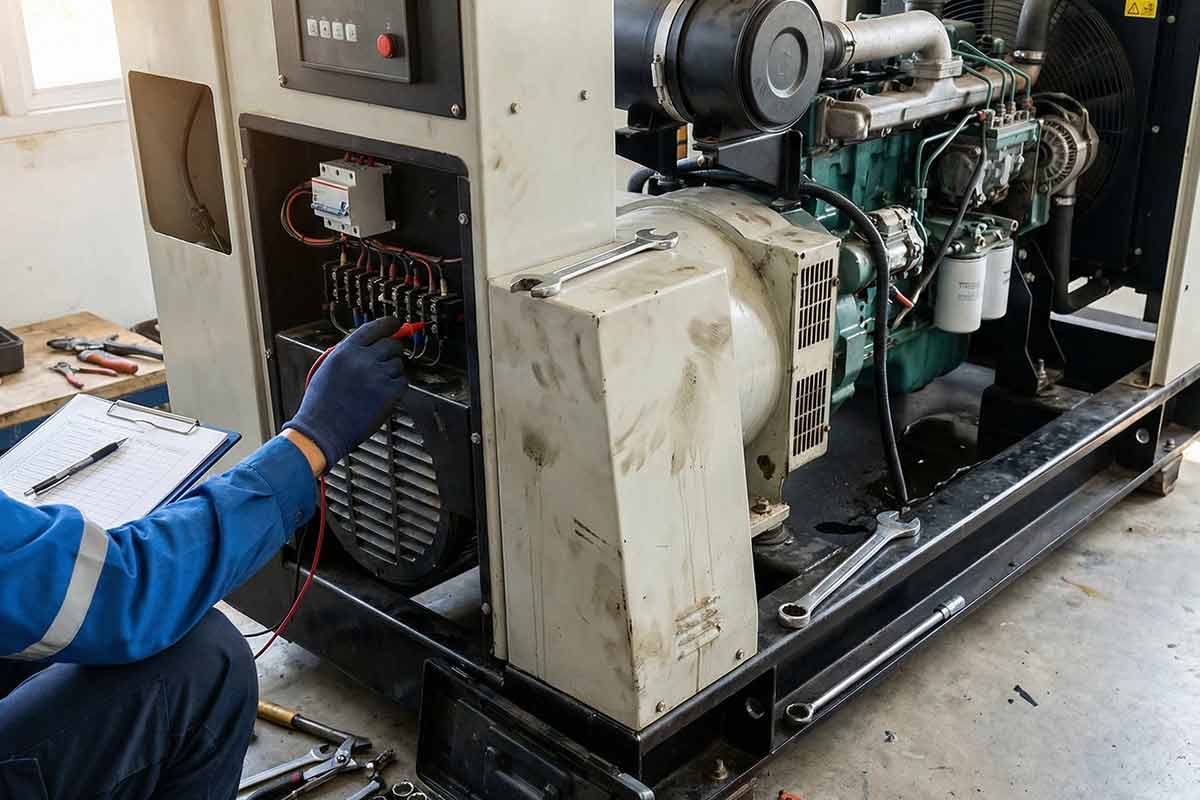
Regular servicing is the best way to protect your investment and ensure your generator is ready when you need it. The small cost of oil, filters and your time is nothing compared to the cost of a generator that won’t start in an emergency.
Do you have another question or require additional advice? Don’t hesitate to get in contact with our experts using this form or via phone on +441639849847.
Looking for a quality generator? At Generators Direct, we offer a range of single and three-phase generators, power stations and power banks for your specific needs. All of our products are manufactured, tested and certified to industry standards and come with a price promise – you won’t find prices cheaper anywhere on the web, but if you do, we’ll match them. In addition to this, all orders come with free mainland UK shipping and after-sales support from our experts.
Related articles
-
 August 19th 2026
Flexible Business Payment Options for Generators with iwocaPay
-
July 9th 2026
Are Hyundai Diesel Generators Any Good? UK Buyer’s Guide
-
September 3rd 2025
Can a Portable Generator Charge an Electric Car?
-
June 17th 2025
Which Generator Is Best: Petrol or Diesel? Your Guide
-
July 19th 2024
The Ultimate Guide to Portable Power Stations










Be the first to know the latest industry news and offers