Common Generator Faults and How to Fix Them
November 13, 2025 | Nate Cord
While most generators are designed for long-term use, over the course of their lifetimes, they can become prone to some recurring issues. Of course, no piece of equipment is immune to failure, so it helps to be aware of what potential problems can arise and how you can fix them.
At Generators Direct, we sell a wide range of generators, from petrol generators to diesel generators, as well as portable power stations, all of which can share some similar faults and mishaps.
While all of our products are covered under a manufacturer’s warranty, sometimes rolling up your sleeves and getting to work is more efficient. Here, we’ll cover some common generator faults, from a failure to start to a lack of power, as well as potential remedies.
Fault: Generator Not Producing Power
Regardless of the fuel type, size, or age, the failure to provide power is a highly frustrating fault.
Unfortunately, fixing this issue will largely depend on the cause. In most cases, a lack of power comes down to:
- An issue with the fuse/circuit breaker.
- Too many connected devices.
- An internal fault/continuity problem with the generator’s power circuit.
In which case, your remedy will depend on the underlying failure. Eliminating these one by one can quickly isolate the problematic component, helping you fix the problem. Be sure to start with the simplest solution first, such as unplugging any connected devices or trying different ones, before you consider more technical fixes, such as faulty wiring or the internal circuitry.
Fault: Battery Won’t Charge
Generators with backup battery power can be a lifesaver. In the event that you run out of fuel or sunlight, the battery kicks in to take over the provision of power.
Though, quite like with a failure to start, battery charging fault can come from a variety of sources, such as:
- A fault with the battery itself.
- Extreme battery degradation.
- An issue with the BCU (battery control unit).
- A damaged charging port (for portable units).
As is the case with a lack of power, the easiest way to diagnose battery failure is to troubleshoot the simplest steps first before resorting to more extreme means. Sometimes, the issue will lie with the battery itself rather than the rest of the generator and its charging components. In which case, it can be helpful to remove the battery and try charging it with other equipment (if possible).
Remember, batteries can contain some harmful substances, and lithium-ion batteries in particular are prone to exploding if improperly handled. As such, you should always consult a trained professional.
Fault: Generator Won’t Start
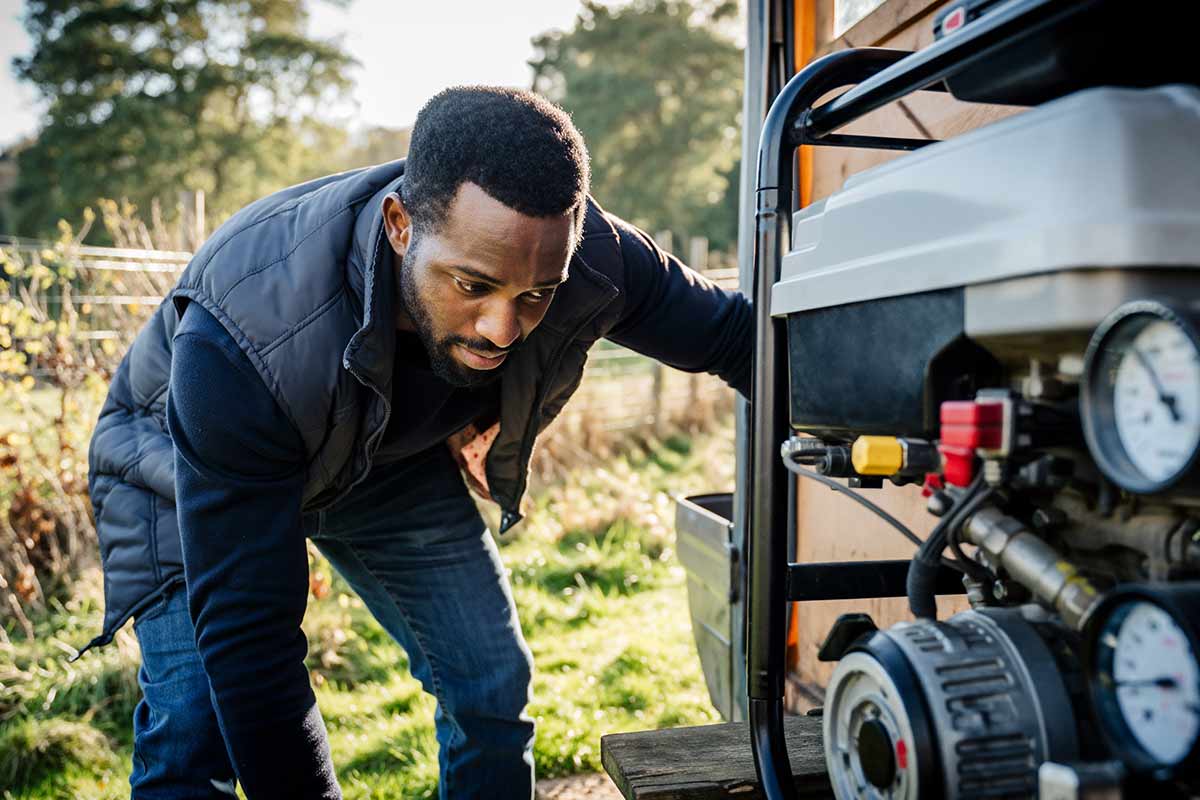
Generator faults can be difficult to address. But don’t worry, help is always available at Generators Direct.
Perhaps one of the most substantial issues that generators face is their starting mechanism.
Petrol and diesel generators function much like motor vehicles, and will have similar components within them, such as a starter motor and ignition system. Each of those components forms an integral part of the startup/shutdown process, and each is prone to failure. Likewise, the issue could also be quite simple.
When diagnosing why your generator won’t start, first look to the user-operable elements like the power/killswitch (if yours has one). For example, if the generator’s fail-safe switch only permits startup while the button is pressed, the unit will not start up. Seeing to this beforehand can save a lot of time and effort.
Sometimes, a generator not starting can come down to the type of fuel that you’ve used. Some generators may require a specific grade of petrol or diesel in order to function properly which, if not used, may cause them to not start up correctly (or at all).
Fault: Stalling
That’s right, just like a car, a generator can stall from time to time. Stalling can both prevent the unit from powering up and also cause it to cut out after a short period.
Stalling usually stems from a fault with a few different components, such as:
- The spark plugs
- Fuel lines
- Various sensors (oil levels, overload detection, etc)
- Filters
- Ignition coil
With stalling, the goal is to determine the chain of events leading up to the stall taking place. If there isn’t a traceable or repeatable set of actions that cause the stall, the issue could lie much further within the generator. At which point, your best solution would be to contact the retailer or manufacturer.
The best way to prevent stalling is to ensure that your generator is regularly maintained. To keep your generator in top shape, consult our maintenance guide: 6 Generator Maintenance Tips Every Owner Should Know
Leaking Fluid
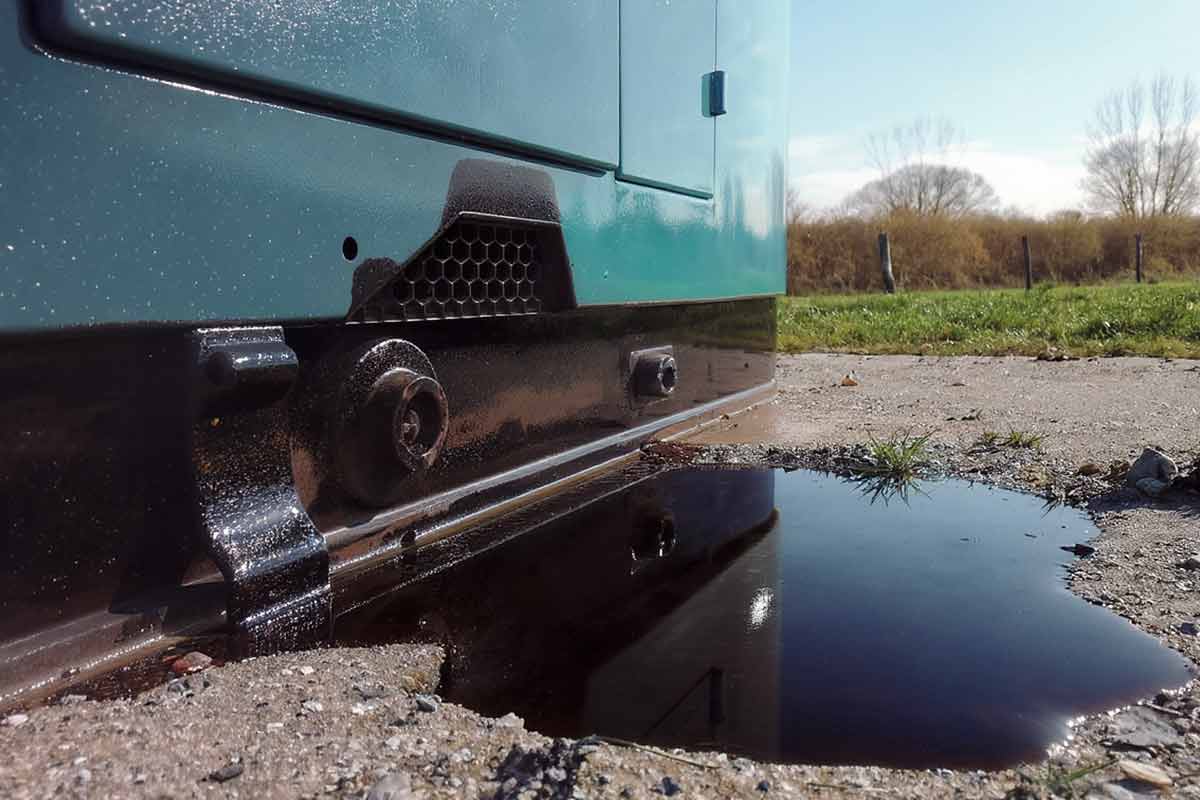
Generators require a mixture of different liquids to operate.
Electricity and liquids do not mix. But of course, in order to function properly, a generator requires a combination of several liquids. While petrol and diesel themselves are not electrically conductive, other fluids, such as old coolant, can be. So, any leaks within your generator should be dealt with quickly to prevent more damage being done.
Leaks are caused in a number of ways on power generators, including:
- Degraded hoses/gaskets
- Loose clamps/bolts
- Overfilled coolant/fuel
- An uneven surface
To minimise leaks, give your hoses a visual inspection every once in a while. If you notice drips or puddles, they could be in need of repair/replacement. You should also ensure your unit is installed on a flat, even surface. If anything is off balance, the liquids inside may gradually tip over.
Wet stacking can also cause leaks, particularly in diesel-powered generators.
What is Wet Stacking?
Wet stacking is an issue that affects diesel-powered engines. It can be diagnosed by a wet, black substance leaking from the fuel pipes. Some technicians might refer to this problem as “stacking”, and it essentially means that a generator isn’t able to utilise excess fuel being delivered to its cylinders.
Your Trusted Generator Retailer
Every new generator we sell, whether it’s a petrol-powered generator, a diesel one, or a smaller portable unit, is backed with a manufacturer’s warranty. Plus, every one is inspected to verify its performance. We also offer an after-sales service should your unit develop issues.
Arguably, the number one way of avoiding issues developing with your generator is to follow a regular maintenance schedule. To make this easier, we sell a variety of generator service kits that include all the necessary components to keep your generator running smoothly.
If you need help choosing a generator, be sure to consult our generator buying guide. There, you’ll find a range of tips to streamline your decision-making process. Or, for tailored guidance, you can give our team of generator experts a call on +44 1639 849847.
Related articles
-
 July 22nd 2025
How Much Does It Cost to Run a Generator?
-
October 4th 2024
What Size Generator Do I Need to Run a House?
-
July 11th 2025
Are Home Backup Generators Worth It?
-
January 19th 2026
Thermoelectric Generator vs Solar Panels: Your Guide
-
May 9th 2024
Generator Buying Guide: Everything You Need to Know










Be the first to know the latest industry news and offers