How to Choose an Industrial Heater
January 28, 2026 | Nate Cord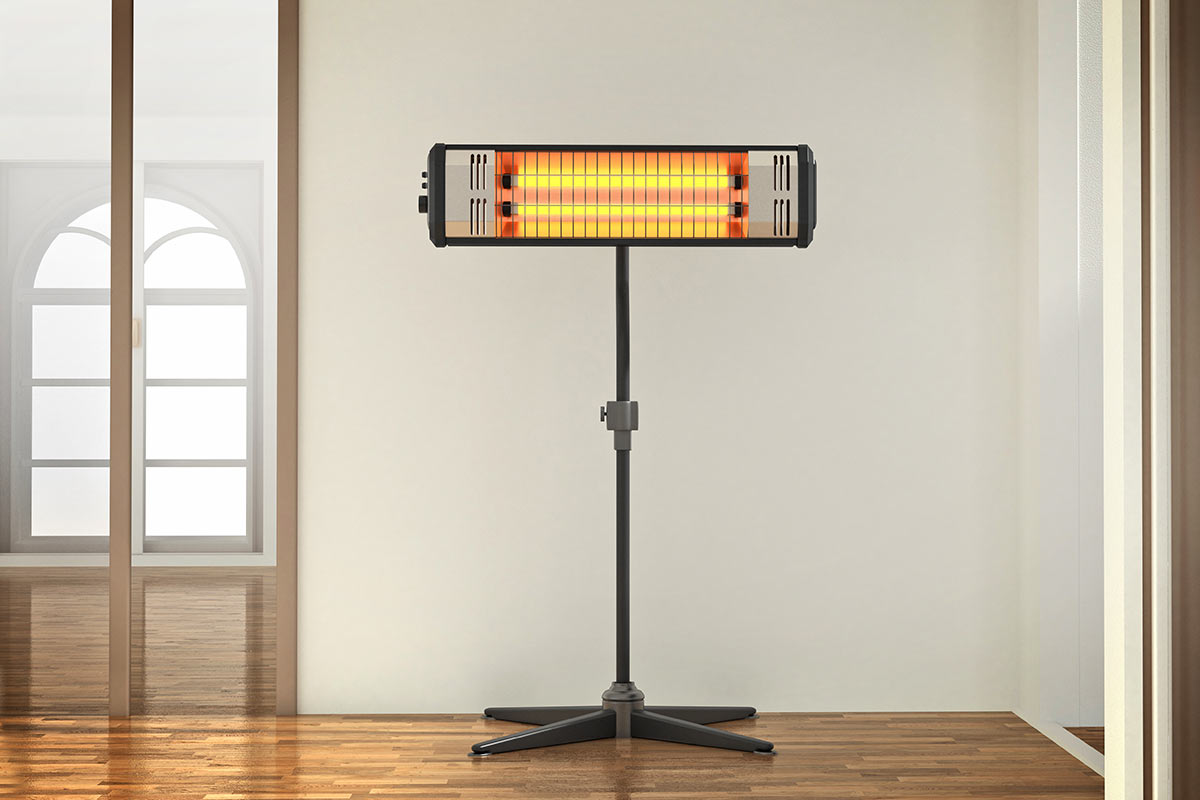
Industrial heaters are essential during the winter months in spaces that struggle to keep out the cold, such as building sites or warehouses.
While all industrial heaters have the same goal to heat a space, not all heaters are suited for all spaces. Industrial heaters come in many types and sizes, each suited to particular jobs, environments and business needs. Selecting an unsuitable model can lead to high energy bills, inadequate temperatures or safety hazards.
In this guide, we run through the common types of industrial heaters, fuel, and which is best depending on your use case.
Main Types of Industrial Heaters
Heaters are primarily defined by their heat transfer method and fuel source. We’ll start with the former and cover the core technologies that power industrial heaters.
1. Infrared Heaters
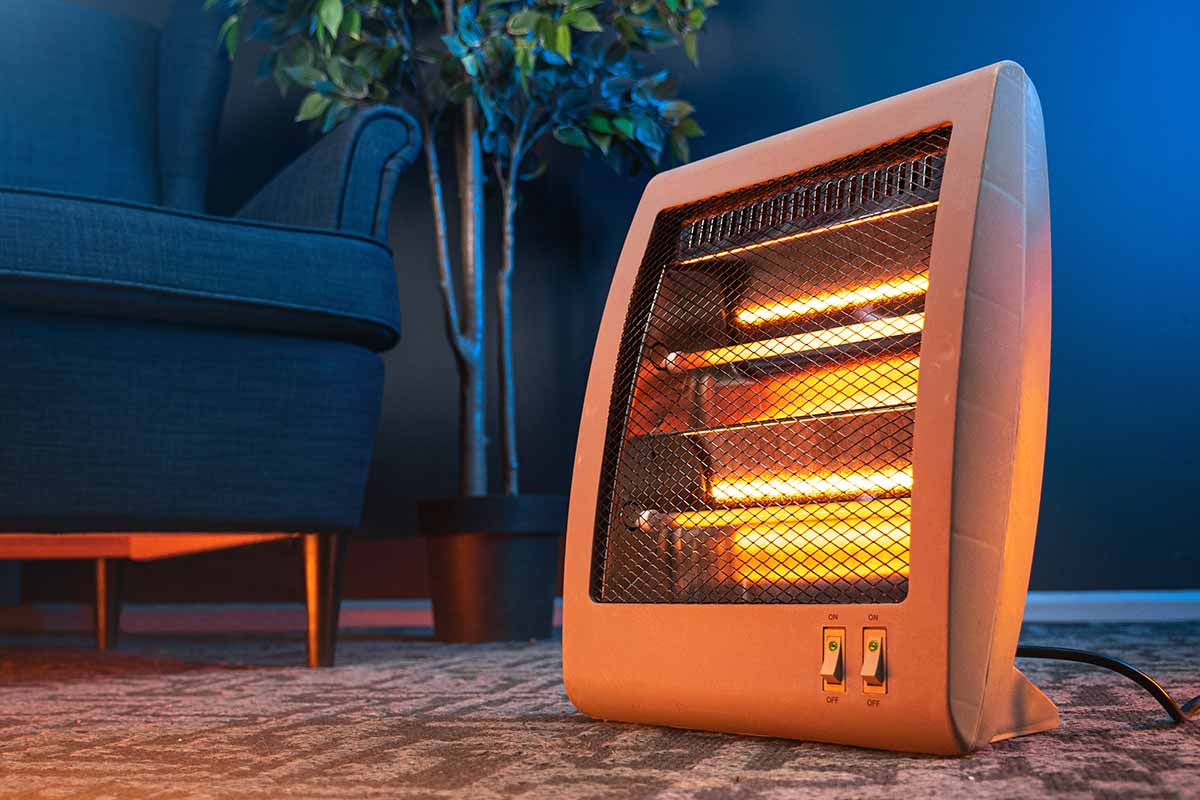
Radiant heaters, also known as infrared heaters, work like the sun. They emit heat that’s absorbed by surfaces and people rather than heating the entire air. In other words, when infrared rays touch a surface, heat energy is released, regardless of the surrounding air temperature.
These heaters aren’t designed to heat a large space. Instead, they work instantly on the areas in front of them and stop giving out heat as soon as they’re turned off. This makes them efficient for spot (or zonal) heating in large, draughty, or poorly insulated spaces where heating the entire air volume would be prohibitively expensive.
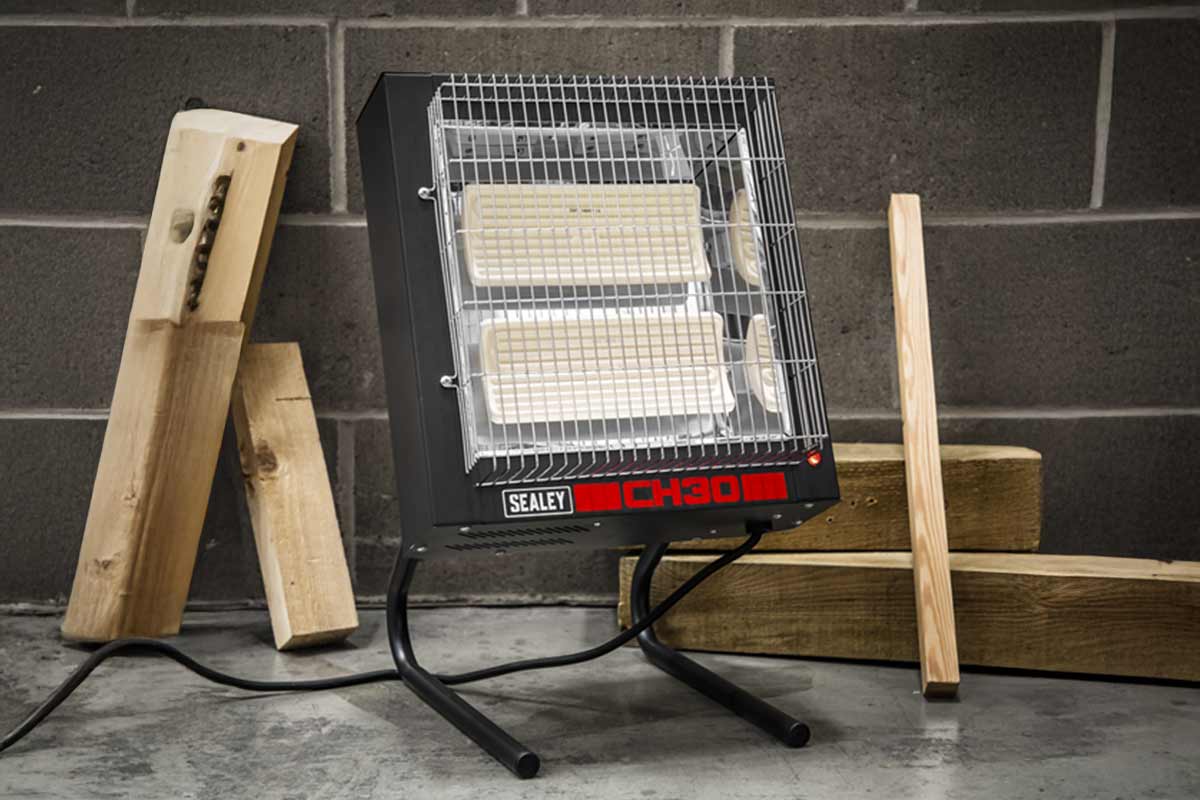
On our site, you’ll find this technology in our Infrared, Quartz and Halogen Heater ranges. Quartz and Halogen refer to the type of infrared-emitting element used, but both are designed to produce near-instant heat.
Infrared heaters are best for large, draughty spaces, such as workshops, loading bays, repair garages, sports halls, and outdoor semi-enclosed areas, such as smoking shelters.
2. Convective Heaters
Convective heaters (often called forced-air heaters) heat the air directly. A fan then circulates this warmed air throughout the space to create a consistent ambient temperature. Forced air heaters are highly effective in well-insulated buildings where heat loss is controlled.
You’ll find this technology in fan and portable space heaters. Fan heaters often use an electric element and a fan to deliver fast, even heat distribution, with simple plug-in installation. They’re compact, often portable, and good for temporary or adjustable heat. Space heaters are a broader term that includes fan-assisted models like these, which are commonly used to provide localised heat in small to medium-sized areas.
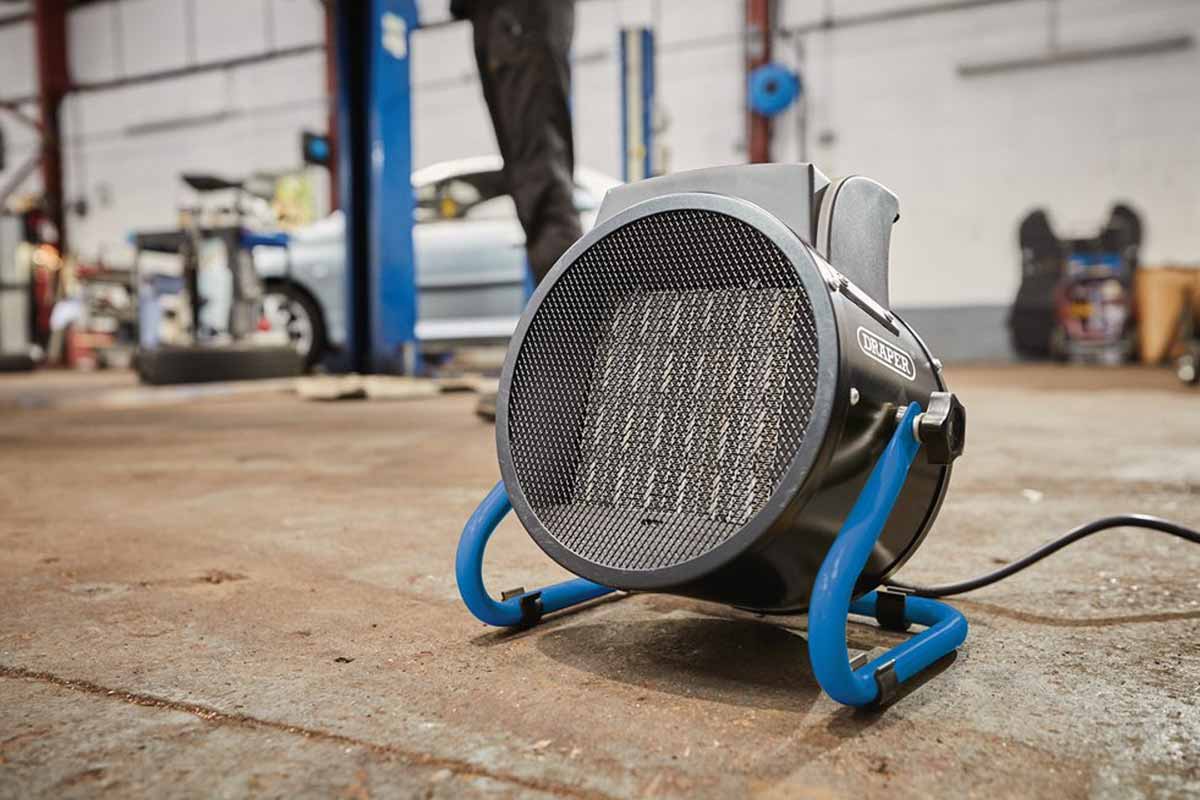
Forced air heaters are best suited to insulated warehouses, temporary structures, or for localised heating where workers need warmth in specific zones. In industrial environments, fan heaters are often used as a supplementary heat source to boost colder areas that the main heating system does not effectively reach.
3. Indirect-Fired Air Heaters
Indirect-fired air heaters use a heat exchanger to separate combustion gases (which are vented outside) from the clean air being warmed and circulated inside.
If you need safe, powerful heat for an enclosed space like a workshop or warehouse, an indirect-fired heater is often the ideal solution. Unlike direct-fired models, these units keep the combustion process completely separate from the air you breathe.
While extremely safe, a small amount of heat is lost through the flue, making them slightly less thermally efficient than direct-fired models. Regardless, these are great for enclosed workshops, garages, warehouses, and industrial units where staff are working for long periods and good air quality is essential.
4. Direct-Fired Air Heaters
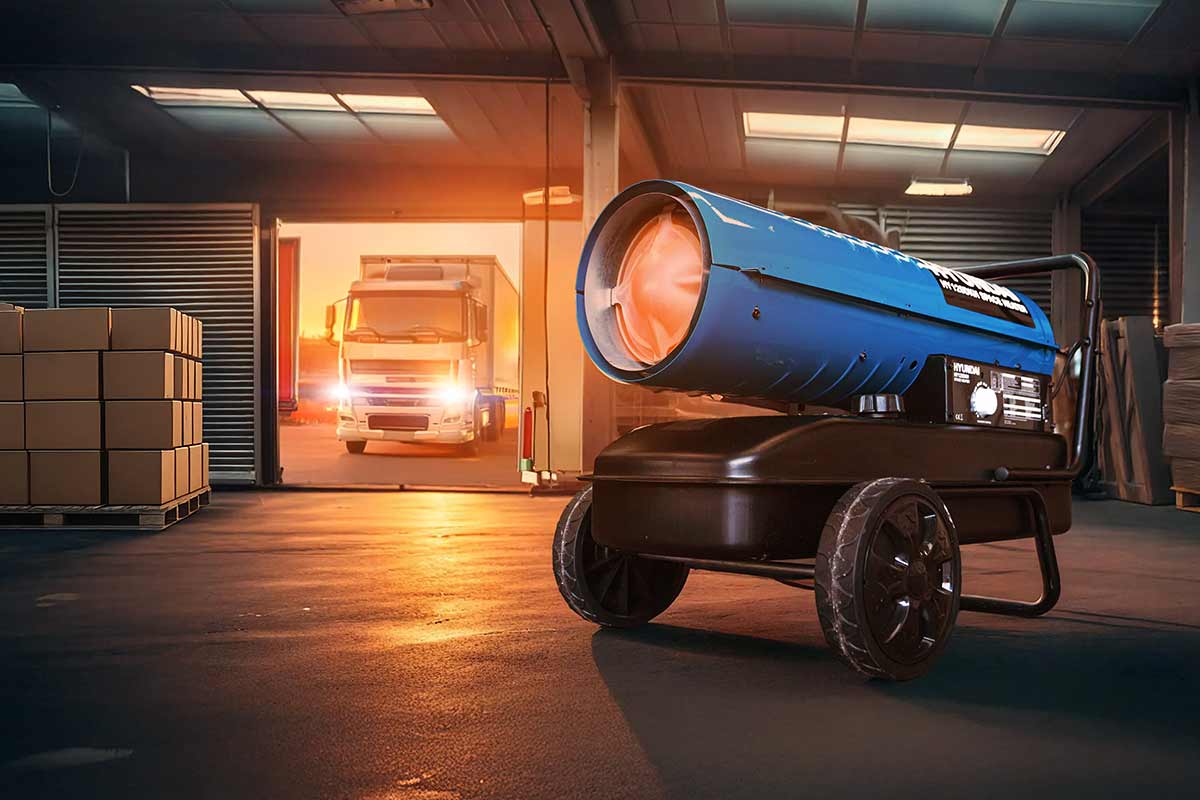
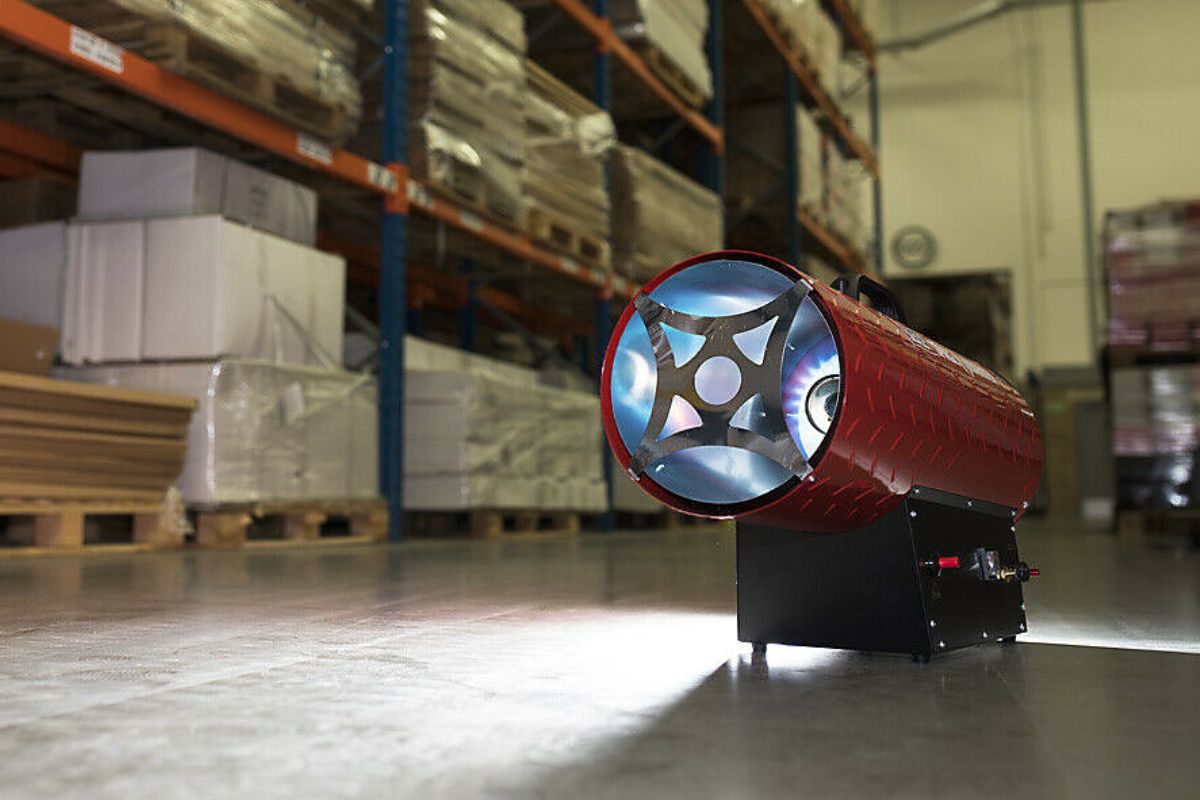
Direct-fired air heaters are powerful combustion units that burn fuel (typically gas or diesel) and introduce the cleaned combustion products directly into space. They offer near-100% fuel efficiency and a massive, rapid heat output. However, they require excellent continuous ventilation. If it’s for indoor use, it often requires a flue.
This makes them best for heating agricultural buildings, factories, construction sites and other well-ventilated spaces.
Fuel Source
Having chosen the right heating technology for your space, you still need to consider the power source. Your choice of fuel is a major determinant of installation and running costs, as well as day-to-day operations.
Electric
Electricity is the most straightforward power source for many industrial heating applications. Every heater that plugs into a standard or industrial socket is electric.
The key benefits? All electrical energy is converted into heat at the point of use, with no flue or exhaust losses. It requires no specialist gas work or flue installation, and no burners, fuel lines or filters, and produces no fumes, moisture or combustion, making it safe for sealed or occupied spaces.
However, electricity is more expensive per kilowatt-hour (kWh) than gas, often making it more expensive for continuous, high-output heating of large spaces.
Gas (Natural/LPG)
Gas heaters burn natural gas (mains) or liquefied petroleum gas (LPG, from bottles or tanks) to generate heat. They are a primary choice for large-scale, continuous heating due to lower fuel costs.
Indeed, the price per kWh of gas is significantly lower than that of electricity, offering substantial savings for long-run operations. It’s also capable of delivering much higher heat outputs for longer, such as all day in a warehouse.
However, gas requires professional installation. Flued models are essential for most indoor applications to safely exhaust combustion gases (like carbon monoxide). Unflued portable gas heaters are for outdoor or exceptionally well-ventilated use. These also require regular servicing to ensure they remain safe and efficient.
Oil (Kerosene)
Oil-fired heaters burn kerosene or diesel to produce a powerful stream of warm air. They are synonymous with high-output, temporary or off-grid heating, making them perfect for spaces without a mains gas or sufficient electrical connection.
Direct-fired models introduce combustion gases into the space and are only suitable for well-ventilated or unoccupied areas (e.g., during construction). Indirect-fired models, which separate the combustion air from the warmed air via a heat exchanger, are safer for occupied spaces but are more expensive. These also require safe storage tanks and manual refuelling between uses.
These often wheel-mounted heaters can deliver a massive volume of heat quickly, making them ideal for drying out buildings or heating vast spaces rapidly.
Overall, your fuel decision ultimately hinges on your site’s infrastructure, your budget’s balance between upfront and ongoing costs, and your heater’s specific usage patterns.
While gas may be cheaper per unit, installing a flue system can be expensive. Electric heaters have near-zero installation costs but higher ongoing bills, for example.
As a result, there is no universally “best” fuel, only the best fuel for your specific application, building and budget.
How to Choose an Industrial Heater
Ask yourself the following questions to determine which industrial heater is right for you.
1. Assess Your Space & Ventilation
- What’s the size and layout?
- What’s the insulation like? This is the biggest factor in heat loss and required power.
- What’s the air quality and ventilation? Dusty or fume-filled environments need safe electric options. Fuel-burning heaters need excellent airflow.
2. Determine Your Goal
- Need instant, spot warmth in a draughty area? → Choose Infrared.
- Need to heat the air evenly in an insulated room? → Choose Convective.
- Need massive, rapid heat in a very well-ventilated space? → Consider Direct-Fired.
3. Select Fuel Source
Now consider the practicalities of power. Your choice between electric, gas, and oil will be determined by your site’s infrastructure, running costs, and safety requirements, as laid out above.
4. Calculate Your Power Needs
An undersized heater will struggle, while an oversized one will waste energy, causing unnecessary wear and higher costs.
As a general rule of thumb, you can determine the heat required with the volume of space (m³) x insulation factor. A 10,000m³ warehouse with average insulation needs approx. 350 kW (10,000 x 0.035), for example.
However, please note that this is a guideline. Professional calculation accounts for doors, windows, and air changes. For peace of mind, let our experts perform this calculation for you.
5. Prioritise Safety Features
Look for models with tip-over switches, overheat protection, and oxygen depletion sensors (common on newer propane/diesel models).
Consider Smart Features for Efficiency
Modern controls, such as programmable thermostats & timers, can help to set schedules to reduce heat during nights and weekends, while modulating burners and frost protection settings can adjust flame output to match demand precisely and prevent pipe freezing at minimal cost.
By understanding your space, matching the technology to your goal, and carefully considering fuel and safety, you can select an industrial heater that delivers efficient, reliable, and cost-effective warmth for your business.
Do you have another question or require additional advice? Don’t hesitate to get in contact with our experts using this form or via phone at +441639849847.
Looking for a quality heater or other power solutions? At Generators Direct, we offer a range of heaters, generators, power stations and power banks for your specific needs, as well as a range of fans, garden machinery and more. All of our products are manufactured, tested and certified to industry standards and come with a price promise – you won’t find prices cheaper anywhere on the web, but if you do, we’ll match them. In addition to this, all orders come with free mainland UK shipping and after-sales support from our experts.
Related articles
-
 August 20th 2025
Are Honda Generators Worth the Money?
-
June 19th 2026
How to Choose a Portable Power Station: 6 Key Tips
-
September 3rd 2025
Can a Portable Generator Charge an Electric Car?
-
September 24th 2025
What Are the 5 Best Solar-Powered Generators in 2025?
-
February 19th 2025
The Different Types of Portable Heaters: A Comprehensive Guide









Be the first to know the latest industry news and offers